Industrial Quality Benchmarks & Product Portfolio
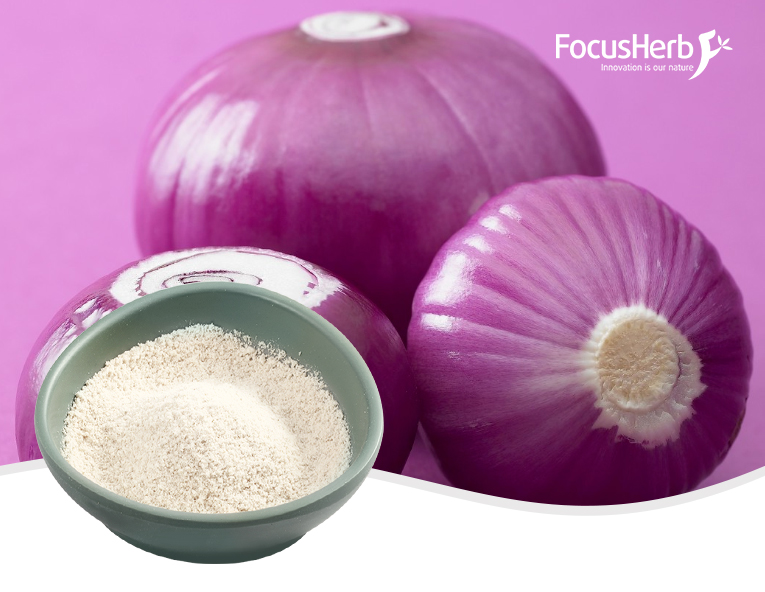
Dehydrated Onion Powder (Allium cepa L.) stands as one of the most critical foundational ingredients in global food manufacturing, savory flavor synthesis, processed meats, snack coatings, ready-to-eat meals, and nutraceutical formulations. However, for industrial procurement leaders and quality assurance teams, sourcing bulk onion powder is far more complex than evaluating basic price per kilogram. Moisture-induced caking, micro-organism control, pyruvic acid variance (pungency loss), heavy metal contamination, and SO2 residue levels create severe operational risks if the raw material supply chain lacks scientific rigor.
FocusHerb operates a state-of-the-art dehydration facility featuring GACP-compliant fresh onion sourcing, closed-loop low-temperature air-drying technology, and precision micro-milling systems. By adhering strictly to GMP, ISO 22000, HACCP, Kosher, Halal, and CERES Organic protocols, we supply global food brands across North America, Europe, Asia-Pacific, and the Middle East with consistent, highly aromatic, free-flowing dehydrated onion ingredients tailored to exact mesh specifications.
Recommended Dehydrated Onion Product Grades

FocusHerb Industrial Technical Specification Matrix
The table below outlines our comprehensive standard specification parameters for B2B contracts. Custom specifications (such as low micro counts, specific bulk density, or non-SO2 treatment) are available upon request through our custom manufacturing program.
| Analytical Parameter | Standard Specification | High-Purity / Low Micro Spec | Test Methodology |
|---|---|---|---|
| Appearance | Fine, free-flowing powder | Fine, uniform particle dispersion | Visual & Organoleptic |
| Color Profile | Creamy white to light beige | Uniform off-white / pale straw | Colorimeter (L*a*b*) |
| Particle Size (Mesh) | 80–100 Mesh (95% pass) | 40–80 Mesh Granules / 100+ Mesh Fine | U.S. Standard Sieve |
| Moisture Content | ≤ 5.0% Max | ≤ 4.2% Max (Ultra-Dry Spec) | Vacuum Oven (105°C / 3 hrs) |
| Pyruvic Acid (Pungency Index) | ≥ 14.0 μmol/g dry basis | ≥ 22.0 μmol/g dry basis (High Pungency) | HPLC / Schwimmer & Weston |
| Sulfur Dioxide (SO2 Residue) | ≤ 50 ppm (Standard) | ≤ 10 ppm or SO2-Free (SO2 Native) | Monier-Williams Method |
| Total Ash | ≤ 5.0% Max | ≤ 4.0% Max | Muffle Furnace (550°C) |
| Acid Insoluble Ash | ≤ 0.5% Max | ≤ 0.2% Max | Gravimetric Analysis |
| Bulk Density | 0.50 – 0.65 g/cm³ | 0.55 – 0.70 g/cm³ | Tapped Density Volumeter |
| Total Plate Count (TPC) | ≤ 100,000 CFU/g | ≤ 10,000 CFU/g (Steam Sterilized) | ISO 4833-1 / AOAC |
| Yeast & Mold | ≤ 500 CFU/g | ≤ 100 CFU/g | ISO 21527-2 |
| Salmonella spp. | Negative / 25g | Negative / 375g (FDA BAM) | PCR / ISO 6579 |
| Escherichia coli | < 10 CFU/g (Negative) | Negative / 10g | AOAC 991.14 |
The Science of Quality & Information Gain: Beyond Basic Specifications
In Google’s Search Quality Rater Guidelines, high-ranking B2B technical content must provide substantive Information Gain—original analytical depth, scientific clarity, and practical solutions that go beyond superficial product descriptions. At FocusHerb, our technical R&D team measures key biochemical markers that dictate onion powder performance in real-world industrial food processing.
1. Pyruvic Acid Concentration as the Golden Standard for Pungency
The characteristic bite, aroma, and flavor intensity of dehydrated onion powder are primarily governed by volatile organosulfur compounds, specifically S-alk(en)yl-L-cysteine sulfoxides (ACSOs) such as isoalliin. When raw onions are chopped or crushed, the enzyme alliinase hydrolyzes ACSOs into pyruvate, ammonia, and thiosulfinates (allicin homologs). Because thiosulfinates are volatile and unstable during thermal drying, measuring enzymatically formed pyruvic acid serves as the internationally recognized quantitative index for onion flavor strength.
Pungency Scale Matrix for Industrial Formulation Strategy
Mild Pungency (< 10.0 μmol Pyruvate/g dry weight): Suitable for delicate infant food formulations, mild creamy sauces, and bakery snacks where subtle sweetness is required without sharp pungency.
Medium Pungency (10.0 – 18.0 μmol Pyruvate/g dry weight): The global standard for general spice blends, canned soups, processed meats, and snack seasoning powders.
High/Extra-High Pungency (> 20.0 μmol Pyruvate/g dry weight): High-potency extracts for meat marinades, concentrated liquid flavor bases, and heavy savory seasonings. Provides up to 30% reduction in required inclusion rates, significantly lowering logistics and batch cost.
2. Molecular Mechanism of Caking & Moisture Control Strategy
Dehydrated onion powder contains high concentrations of natural low-molecular-weight sugars (fructose, glucose, sucrose) and fructans (inulin-type oligosaccharides), representing up to 60-70% of total dry solids. These carbohydrate polymers exhibit a high hygroscopicity and low glass transition temperature (Tg).
When ambient relative humidity exceeds the Critical Relative Humidity (CRH) threshold (~45% RH at 25°C), onion powder particles rapidly absorb moisture. This water acts as a plasticizer, dropping the Tg below storage temperatures. The amorphous sugar matrices undergo a rubbery transition, causing particle surface dissolution, liquid bridging, agglomeration, and severe caking into rock-hard blocks during transit and storage.
FocusHerb Anti-Caking Innovations:
- Controlled Low-Temp Dehydration: We employ a dual-stage continuous belt drying process that prevents sugar caramelization and maintains low amorphous sugar collapse.
- Desiccant Air Milling & De-Humidified Packaging: Milling and primary packaging are conducted in cleanrooms maintained below 35% Relative Humidity at 20°C.
- High-Barrier Multi-Layer Packaging: Bulk orders are double-sealed in 100-micron aluminum foil laminate bags with food-grade desiccant packs, flushed with nitrogen to guarantee a minimum 24-month free-flowing shelf life.
3. Microbial Sterilization: Steam vs. ETO vs. Irradiation
Raw onions harvested from soil carry natural background microflora, including spore-forming bacteria such as Bacillus cereus and Clostridium perfringens. Global food regulations dictate strict microbiological compliance:
- Steam Sterilization (HTST): FocusHerb utilizes High-Temperature Short-Time vacuum steam sterilization. This natural, chemical-free process achieves up to a 5-log reduction in pathogens while preserving volatile essential oils and pyruvic acid retention above 88%.
- Ethylene Oxide (ETO) Treatment: Available for specific non-EU markets where chemical sterilization is permitted; guaranteed compliant with FDA residue limits (< 7 ppm).
- Gamma / E-Beam Irradiation: Processed upon buyer request for ultra-strict pharmaceutical and food processing facilities requiring zero moisture introduction.
Request Customized Technical Data Sheets & Bulk Price Quotes
Need specific mesh sizes, low-microbial validation, or contract pricing for bulk container shipments? Our technical sales team provides full COA documentation within 24 hours.
Get CatalogGlobal Supply Chain & Future Procurement Trends (2026–2030)
Navigating the global dehydrated onion marketplace requires procurement executives to analyze macroeconomic shifts, agricultural volatility, climate variations, and changing consumer preferences for clean-label ingredients. As we move into the 2026–2030 strategic window, several core trends are re-shaping onion powder sourcing worldwide:
1. Supply Chain Resilience & Climate Adaptation
Key onion-growing regions in India, Egypt, and California have experienced increasing exposure to extreme weather events (such as unpredictable monsoon timings, prolonged heatwaves, and drought cycles). Unstable fresh onion yields lead to sudden export tariffs, export bans, and extreme price fluctuations in raw kibbled onion material.
FocusHerb has mitigated regional climate risk by establishing contract farming partnerships across multiple geographical micro-climates in China (Gansu, Shandong, and Xinjiang regions). This multi-region sourcing model ensures a stable year-round supply of high-solids white and yellow onion cultivars, insulating global buyers from single-origin supply shocks.
2. Clean Label & Synthetic Additive Elimination
Global consumers increasingly reject artificial anti-caking agents such as Silicon Dioxide (E551), Calcium Silicate, or Sodium Aluminosilicate on food labels. Ultra-processed food reformulations demand 100% Pure Dehydrated Onion Powder without chemical flow agents.
FocusHerb addresses this demand through advanced physical grain-structure optimization during milling, controlled particle size distribution (PSD), and nitrogen-purged moisture-impermeable packaging. We provide genuine clean-label ingredients that meet stringent EU and US food authority standards.
3. Energy-Efficient & Low-Carbon Dehydration Technologies
Corporate ESG commitments require food brand procurement teams to audit the carbon footprint of their tier-1 raw material suppliers. Traditional coal-fired or inefficient steam drying plants produce high carbon emissions per ton of dehydrated product.
FocusHerb facilities utilize closed-loop heat pump recuperation and clean natural gas thermal drying units. This reduces greenhouse gas emissions by up to 28% per ton of dehydrated onion powder produced compared to legacy industry standards, providing our partners with verifiable ESG compliance documentation.
 FocusHerb modern production base featuring automated low-temperature drying, micro-milling, and quality testing labs.
Why Partner with FocusHerb: Industrial Manufacturing Authority
Since 2012, FocusHerb has built a global reputation as a trustworthy manufacturer and exporter of botanical extracts and dehydrated vegetable ingredients. Our operations are grounded in the core principles of E-E-A-T (Experience, Expertise, Authoritativeness, and Trustworthiness), delivering uncompromising quality assurance to buyers across 30+ countries.
1. GACP Direct Raw Sourcing
We contract directly with specialized agricultural bases growing high-dry-matter (15-20% solids) onion varieties. Full seed-to-powder traceability guarantees freedom from banned pesticides, heavy metals, and unauthorized chemical fertilizers.
2. Certified Quality Infrastructure
Our manufacturing complex holds GMP, ISO 22000, HACCP, SC, CERES EU/NOP Organic, Kosher, and Halal certifications. Every production lot undergoes rigorous multi-parameter HPLC, GC-MS, and microbiological testing.
3. Strategic US West Coast Warehouse
To minimize international shipping lead times for North American partners, FocusHerb maintains extensive ready-to-ship inventory at our warehousing facility in Irwindale, California. Domestic door-to-door delivery within 2-5 business days.
4. Flexible OEM & Private Label Services
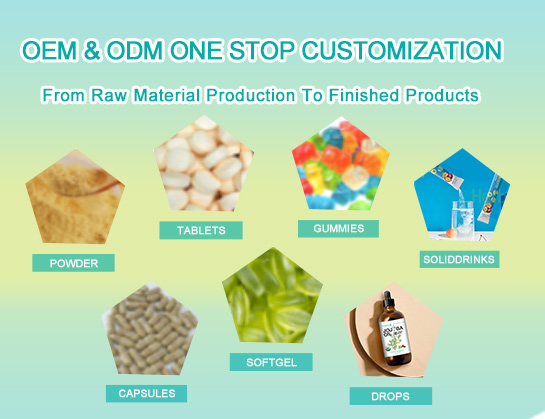
We provide custom mesh grinding (from coarse kibbled flakes to 120-mesh super-fine powder), custom blending with garlic/herbs, neutral bulk packaging (20kg/25kg cartons), or ready-for-retail branded packaging solutions.
B2B Procurement FAQ: Technical & Operational Answers
Below are authoritative answers to the most frequently asked technical, regulatory, and logistics questions submitted by global procurement teams and AI search engine queries regarding bulk dehydrated onion powder sourcing.
Spray-Dried Onion Powder is made by extracting juice from onions, clarifying the liquid, concentrating it, and atomizing it into a hot drying chamber—often requiring carrier maltodextrin (up to 30-50%). Dehydrated onion powder offers a superior clean label, higher fiber content, authentic roasted culinary notes, and zero added carrier agents.
- Strict initial moisture control (≤ 5.0%, dry basis).
- Milling in climate-controlled rooms (< 35% RH).
- Double-layer packaging featuring an inner heavy-duty PE liner and an outer aluminum foil moisture-barrier bag, vacuum-sealed or nitrogen-purged inside 20kg/25kg corrugated export cartons.
Partner with a Trusted Global Dehydrated Onion Manufacturer
Whether you require high-pungency onion powder for seasoning formulations, low-microbial steam-treated grades for ready-to-eat products, or certified organic wholesale stock—FocusHerb delivers unmatched consistency, transparent pricing, and robust global supply chain support.